

There are a number of significant differences between server power and regular power. First, server power typically requires more power to drive the server, which is because the server typically has to handle a larger load. The ordinary power supply is mainly for desktop computers, laptops and other conventional equipment, its power is generally between 150 watts and 350 watts.
Second, server power supplies need to be designed with stricter stability and reliability requirements in mind. This is because servers need to run uninterrupted for long periods of time and need to maintain consistent performance under various environmental conditions. Therefore, the server power supply usually adopts the active pfc+ dual-channel dual-tube forward + output synchronous rectification architecture, compact layout, large motor power, support pwm speed regulation, internal total insurance and anti-overcurrent design, support mos high current control and output protection.
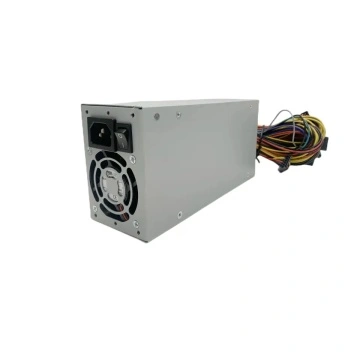
In addition, server power needs to be more efficient. This is because the server needs to consume a lot of power, if the power efficiency is not high, it will lead to a lot of energy waste. Therefore, server power usually adopts higher conversion efficiency, such as white gold, to reduce energy waste.
Finally, the server power supply also needs to have better cooling performance. This is because servers need to run for long periods of time and need to maintain consistent performance at high temperatures. As a result, server power supplies often feature more efficient cooling designs, such as larger heat sinks and more efficient cooling fans.
In summary, there are significant differences between server power supplies and ordinary power supplies in terms of power, stability, reliability, efficiency and heat dissipation performance. These differences make server power more suitable for servers and other devices that require long periods of uninterrupted operation, need to handle larger loads, and require greater efficiency and better heat dissipation performance.